

Finding a Japanese name for flower can feel like walking through a garden in spring: every name is beautiful, and each one means something different.
Below you will find Japanese names for flowers, sorted into groups: cherry blossom and spring flowers, lotus and water flowers, roses and peonies, wisteria, autumn flowers, winter blossoms, wildflowers, and short names that work for anyone. Every name comes with its kanji, a short guide to how it sounds, and its meaning.
You will also learn hanakotoba, the language of flowers, and how to pick a name that fits a baby, a character, or a pet. So read on, say the names out loud, and find the one that blooms for you.
Reading a Flower Name in Japanese: Kanji, Sounds, and Hanakotoba
Japanese flower names use kanji. These are picture characters, and each one holds a meaning. So a name is not just a sound. It is a small picture of a flower in written form.
First, know that one sound can have many spellings. For example, the sound “ren” can mean lotus, love, or far away, all with different kanji. Also, the same kanji can be read in more than one way. So always check both the kanji and the reading you want.
Next, learn the 5 vowels. They never change. Say “a” like “ah,” “e” like “eh,” “i” like “ee,” “o” like “oh,” and “u” like “oo.” Then give each beat the same time. So say Sakura as “sah-KOO-rah,” with three even beats.
Now, here is the part most lists skip. Japan has hanakotoba, the language of flowers. Each flower carries a message. Sakura means kind and gentle, and it also stands for the short, sweet nature of life. Himawari means respect and warm love. Botan means bravery. So the flower you pick is also the message you send.
Each Japanese name for flower in this guide shows its kanji first, then a “say it” guide in brackets. So you can read every name out loud. And if a name still feels hard to say, try it three times fast.
Cherry Blossom & Spring Flowers
Cherry blossoms open the year in Japan. They bloom for just a week or two, and people travel far to see them. So a Japanese name for flower from the cherry family feels fresh, hopeful, and full of spring. If you want a name that sounds like a new beginning, start here.
- Sakura (桜, sah-KOO-rah) — It means “cherry blossom.” In hanakotoba, it stands for kind, gentle, and the short beauty of life.
- Sakurako (桜子, sah-koo-RAH-koh) — This name means “cherry blossom child.”
- Sakurami (桜美, sah-koo-RAH-mee) — It means “cherry blossom beauty.”
- Sakurae (桜江, sah-koo-RAH-eh) — The kanji mean “cherry blossom” and “bay.”
- Sakurana (桜菜, sah-koo-RAH-nah) — It means “cherry blossom greens.”
- Sakurasou (桜草, sah-koo-rah-SOH) — This name means “cherry blossom grass.” It is the Japanese primrose, and it stands for first love.
- Hana (花, HAH-nah) — It means “flower.” Also, it is the simplest flower name in Japan, and one of the most loved.
- Hanako (花子, hah-NAH-koh) — This name means “flower child.” For example, it was one of the most common girls’ names in old Japan.
- Hanae (花江, hah-NAH-eh) — It means “flower bay.”
- Hanami (花美, hah-NAH-mee) — The kanji mean “flower” and “beauty.” In fact, it is also the word for viewing cherry blossoms.
- Hanaka (花香, hah-NAH-kah) — It means “flower fragrance.”
- Hanano (花乃, hah-NAH-noh) — This name means “flower field.”
- Haru (春, HAH-roo) — It means “spring.” In fact, it is one of the sweetest short names in Japan.
- Haruka (春花, hah-ROO-kah) — It means “spring flower.” Also, it is a well-known name that works in Japan and abroad.
- Haruna (春菜, hah-ROO-nah) — This name means “spring greens.”
- Haruno (春乃, hah-ROO-noh) — The kanji mean “spring” and “field.”
- Momo (桃, MOH-moh) — It means “peach blossom.” Also, it stands for charm and a warm, sunny nature.
Lotus & Water Flowers
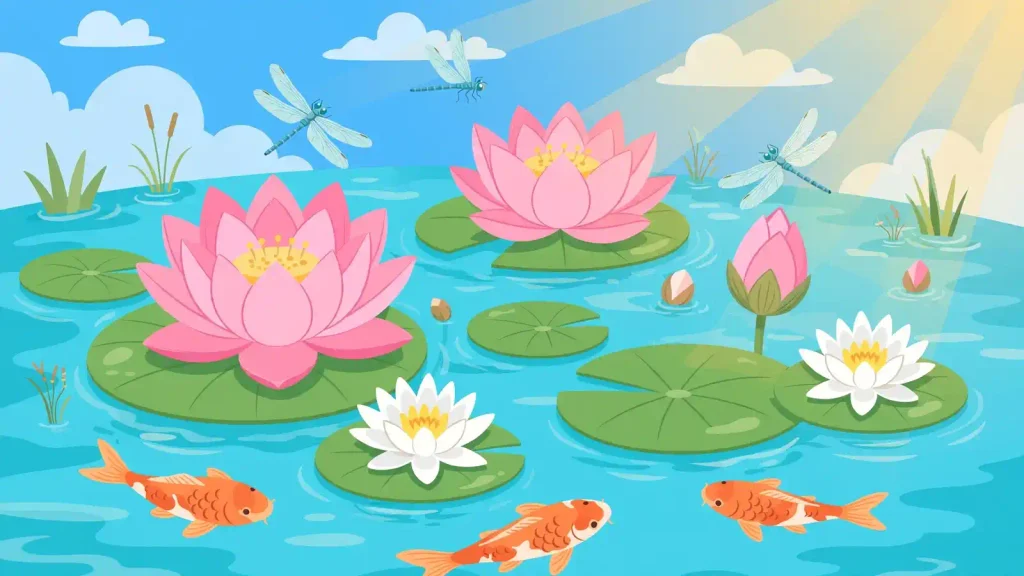
The lotus grows in muddy water, yet it opens clean and pure. So a Japanese name for flower from the water carries a calm, strong meaning. They suit a child, a character, or a pet that should stay pure and bright in any place. And many of them are easy to say in English too.
- Ren (蓮, ren) — It means “lotus.” In fact, it is one of the most loved Japanese names today, for boys and girls alike.
- Hasu (蓮, HAH-soo) — This name also means “lotus,” but with a softer reading.
- Renge (蓮華, REN-geh) — It means “lotus flower.” Also, it stands for purity in hanakotoba, and for love from far away.
- Suiren (睡蓮, soo-ee-REN) — This name means “water lily.”
- Renka (蓮花, REN-kah) — It means “lotus flower.”
- Renko (蓮子, REN-koh) — This name means “lotus child.”
- Renmi (蓮美, REN-mee) — The kanji mean “lotus” and “beauty.”
- Renna (蓮奈, REN-nah) — It means “lotus” and “greens.”
- Hasumi (蓮見, hah-SOO-mee) — This name means “lotus” and “to see.”
- Ayame (菖蒲, ah-YAH-meh) — It means “iris.” In hanakotoba, it brings good news and loyalty.
- Shobu (菖蒲, SHOH-boo) — This name also means “iris,” with a stronger reading.
- Ajisai (紫陽花, ah-jee-SAH-ee) — It means “hydrangea.” Also, it stands for pride in hanakotoba, and it blooms in the rainy season.
- Suisen (水仙, soo-ee-SEN) — This name means “narcissus.” So it is a winter flower that stands for self-respect.
- Fuyo (芙蓉, FOO-yoh) — It means “hibiscus,” or cotton rose.
- Kakitsubata (杜若, kah-kee-tsoo-BAH-tah) — This name means “rabbit-ear iris.” Also, it grows by quiet water, and it is one of Japan’s oldest loved flowers.
- Yuri (百合, YOO-ree) — It means “lily.” In hanakotoba, a white lily stands for purity and chastity. So it is a soft, elegant name.
Rose, Peony & Bold Blooms
Some flowers do not whisper. They bloom big, bright, and bold. Roses, peonies, and orchids fall into this group. So if you want a Japanese name for flower with presence, look here. These names suit a strong girl, a bold character, or a pet with a big heart.
- Bara (薔薇, BAH-rah) — It means “rose.” In hanakotoba, a white rose stands for innocence and devotion.
- Barami (薔薇美, bah-RAH-mee) — This name means “rose beauty.”
- Botan (牡丹, BOH-tahn) — It means “peony.” In fact, it stands for bravery in hanakotoba, and it is a king among flowers in Japan.
- Botanko (牡丹子, boh-TAHN-koh) — This name means “peony child.”
- Botanmi (牡丹美, boh-TAHN-mee) — The kanji mean “peony” and “beauty.”
- Shakuyaku (芍薬, shah-koo-YAH-koo) — This name means “herbaceous peony.”
- Ran (蘭, rahn) — It means “orchid.”
- Ranka (蘭花, RAHN-kah) — This name means “orchid flower.”
- Ranko (蘭子, RAHN-koh) — It means “orchid child.”
- Ranmi (蘭美, RAHN-mee) — The kanji mean “orchid” and “beauty.”
- Kaori (香, KAH-oh-ree) — This name means “fragrance.”
- Momoko (桃子, moh-MOH-koh) — It means “peach child.”
- Momoka (桃花, moh-MOH-kah) — This name means “peach blossom.” Also, it stands for charm in hanakotoba.
- Momoe (桃江, moh-MOH-eh) — It means “peach bay.”
- Momona (桃菜, moh-MOH-nah) — The kanji mean “peach” and “greens.”
Wisteria & Hanging Flowers
Wisteria hangs in long purple chains, like rain made of flowers. Hanging flowers have a soft, dreamy feel. So a Japanese name for flower from the wisteria family suits a gentle soul, a romantic character, or a garden that feels like a dream. And they look lovely written in kanji too.
- Fuji (藤, FOO-jee) — It means “wisteria.” In hanakotoba, it stands for love and elegance.
- Fujiko (藤子, foo-JEE-koh) — This name means “wisteria child.”
- Fujimi (藤美, foo-JEE-mee) — It means “wisteria beauty.”
- Fujika (藤花, foo-JEE-kah) — The kanji mean “wisteria” and “flower.”
- Fujina (藤菜, foo-JEE-nah) — This name means “wisteria greens.”
- Fujie (藤江, foo-JEE-eh) — It means “wisteria bay.”
- Fujiyo (藤世, foo-JEE-yoh) — This name means “wisteria world.”
- Fujisa (藤沙, foo-JEE-sah) — The kanji mean “wisteria” and “sand.”
- Fujino (藤乃, foo-JEE-noh) — This name means “wisteria field.”
- Fujiri (藤莉, foo-JEE-ree) — It means “wisteria jasmine.”
- Mokuren (木蓮, moh-koo-REN) — This name means “magnolia.” In hanakotoba, it stands for being natural.
- Hanamizuki (花水木, hah-nah-mee-ZOO-kee) — It means “flowering dogwood.”
- Asagao (朝顔, ah-sah-GAH-oh) — This name means “morning glory.” In hanakotoba, it stands for willful promises.
- Yugao (夕顔, YOO-gah-oh) — It means “evening glory,” or moonflower.
Chrysanthemum & Autumn Flowers

Autumn flowers bloom when most gardens rest. The chrysanthemum is the star of the season, and it is even the crest of Japan’s imperial family. So a Japanese name for flower from autumn carries dignity, long life, and quiet strength. They suit a calm child, a wise character, or anyone born in the fall.
- Kiku (菊, KEE-koo) — It means “chrysanthemum.” In fact, it stands for long life and dignity in hanakotoba.
- Kikuko (菊子, kee-KOO-koh) — This name means “chrysanthemum child.”
- Kikumi (菊美, kee-KOO-mee) — It means “chrysanthemum beauty.” So it sounds bright and proud.
- Kikuka (菊花, kee-KOO-kah) — The kanji mean “chrysanthemum” and “flower.” In fact, it is a clear, strong name.
- Kikue (菊江, kee-KOO-eh) — This name means “chrysanthemum bay.” Also, it sounds calm and old-fashioned.
- Kikuna (菊菜, kee-KOO-nah) — It means “chrysanthemum greens.” So it feels fresh, like an autumn garden.
- Kikuyo (菊世, kee-KOO-yoh) — This name means “chrysanthemum world.” In fact, it sounds grand and full of history.
- Higanbana (彼岸花, hee-gahn-BAH-nah) — It means “red spider lily.” In hanakotoba, it means “never to meet again.”
- Manjushage (曼珠沙華, mahn-joo-SHAH-geh) — This name also means “red spider lily.”
- Kinmokusei (金木犀, keen-moh-koo-SAY) — It means “orange osmanthus.” In fact, it stands for truth and a noble heart, and its small flowers smell sweet in autumn.
- Hagi (萩, HAH-gee) — This name means “bush clover.” So it is one of Japan’s seven autumn flowers, and it stands for longing.
- Susuki (薄, soo-SOO-kee) — It means “pampas grass.” Also, it waves silver in autumn fields, and it stands for harvest and strength.
- Akizakura (秋桜, ah-kee-ZAH-koo-rah) — This name means “cosmos,” or autumn cherry blossom. In fact, it stands for love and purity.
Plum Blossom & Winter Flowers
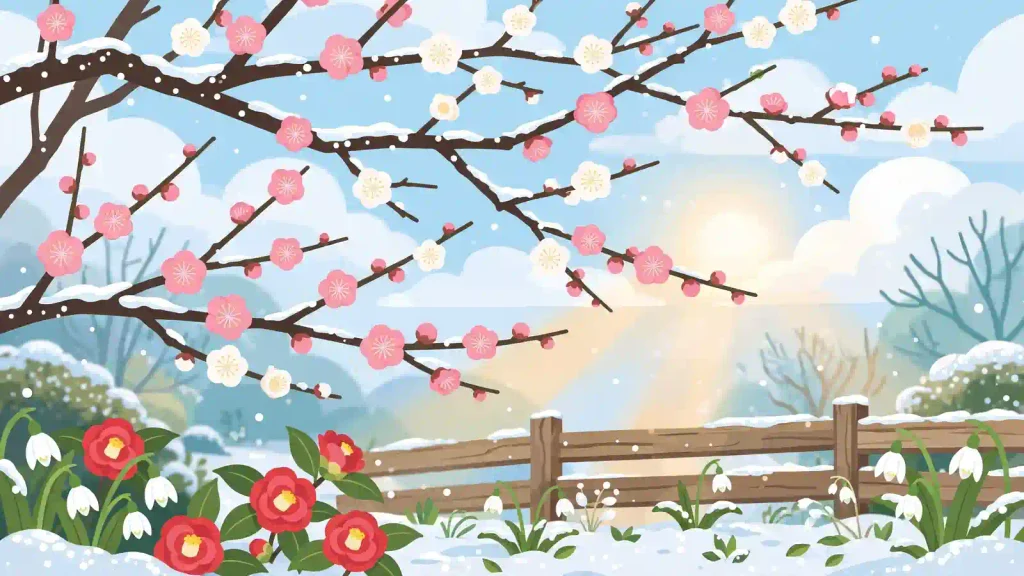
Plum blossoms open in late winter, while snow is still on the ground. They are the first sign that spring is near. So a Japanese name for flower from winter carries hope and patience. They suit a child born in the cold months, or a character who stays strong through hard times.
- Ume (梅, OO-meh) — It means “plum blossom.” In fact, it stands for hope and new beginnings.
- Umeko (梅子, oo-MEH-koh) — This name means “plum child.” Also, it is a warm, old-fashioned name.
- Umemi (梅美, oo-MEH-mee) — It means “plum beauty.” So it sounds soft and hopeful.
- Umeka (梅花, oo-MEH-kah) — The kanji mean “plum” and “flower.” In fact, it is a clear, bright name.
- Umeno (梅乃, oo-MEH-noh) — This name means “plum field.” Also, it sounds gentle and calm.
- Shiraume (白梅, shee-rah-OO-meh) — It means “white plum blossom.”
- Koume (小梅, KOH-meh) — This name means “small plum.”
- Tsubaki (椿, tsoo-BAH-kee) — It means “camellia.” In hanakotoba, a red camellia means “in love, perishing with grace.”
- Tsubakiko (椿子, tsoo-bah-KEE-koh) — This name means “camellia child.”
- Tsubakimi (椿美, tsoo-bah-KEE-mee) — It means “camellia beauty.”
- Sazanka (山茶花, sah-ZAHN-kah) — This name means “sasanqua camellia.”
- Tsubakie (椿江, tsoo-bah-KEE-eh) — The kanji mean “camellia” and “bay.”
Small Wildflowers & Meadow Blooms
Not every flower grows in a garden. Some bloom by roads, in meadows, and between stones. These small wildflowers are modest, tough, and full of charm. So if you want a Japanese name for flower that feels natural and free, look here. And the sunflower in this group turns its young head to follow the sun, which is why it stands for respect and warm love.
- Sumire (菫, soo-MEE-reh) — It means “violet.” Also, it stands for modesty and a sincere heart.
- Sumireko (菫子, soo-mee-REH-koh) — This name means “violet child.”
- Aoi (葵, ah-OH-ee) — It means “hollyhock.”
- Aoiko (葵子, ah-oh-EE-koh) — This name means “hollyhock child.”
- Tsutsuji (躑躅, tsoo-TSOO-jee) — It means “azalea.” In hanakotoba, it stands for patient and modest.
- Nadeshiko (撫子, nah-DEH-shee-koh) — This name means “pink,” or carnation. In fact, it is the flower of the ideal Japanese woman: gentle outside, strong inside.
- Shion (紫苑, SHEE-ohn) — It means “aster.” Also, it stands for remembrance in hanakotoba.
- Shionmi (紫苑美, shee-OHN-mee) — This name means “aster beauty.”
- Tanpopo (蒲公英, tahn-POH-poh) — It means “dandelion.”
- Himawari (向日葵, hee-mah-WAH-ree) — This name means “sunflower.” Also, it stands for respect, warm love, and radiance.
- Nadeshikomi (撫子美, nah-deh-shee-KOH-mee) — It means “pink beauty.”
Short Flower Names for Boys and Girls
Short names are easy to say, easy to spell, and hard to forget. They work for a girl, a boy, a pet, or a character. So if you want a Japanese name for flower that is short and strong, look here. Each one is just one or two kanji, yet it says a lot.
- Rento (蓮斗, REN-toh) — It means “lotus” and “dipper.” In fact, it is a boys’ name that mixes calm with strength.
- Renji (蓮二, REN-jee) — This name means “lotus” and “second son.”
- Kiri (桐, KEE-ree) — It means “empress tree.”
- Saku (咲, SAH-koo) — This name means “to bloom.” In fact, it is one of the shortest flower names, and it sounds full of hope.
- Ai (藍, ah-ee) — It means “indigo plant.” Also, it is a tiny name with a deep, natural color.
- Hana (華, HAH-nah) — This name also means “flower,” but with the poetic kanji. So it is the same sound as Hana 花, with a fancier written form.
- Mio (美桜, MEE-oh) — It means “beautiful cherry blossom.” In fact, it is a well-known name that sounds soft and bright.
- Ayaka (彩花, ah-YAH-kah) — This name means “colorful flower.” Also, it is one of the most loved girls’ names in Japan.
- Rinka (凛花, REEN-kah) — It means “cold flower.”
- Sakiko (咲子, sah-KEE-koh) — This name means “bloom child.”
How to Choose the Perfect Japanese Name for a Flower
A good Japanese name for flower should sound right, mean something you love, and fit the person who carries it. Here is how to pick one with care.
Start With the Flower’s Meaning (Hanakotoba)
First, check what the flower says. Sakura means kind and gentle. Himawari means respect and warm love. Botan means bravery. But higanbana means “never to meet again.” So read the meaning first, then fall in love with the sound. A name with a sad meaning can still work for a character, but think twice before giving it to a baby.
Say It Out Loud and Check the Sound
Next, say the name out loud, many times. Say it fast, like a teacher calling roll, then slow, like a parent at bedtime. If it trips your tongue, drop it. Also, test it outside Japan. Say the name to friends who do not speak Japanese. Can they say it on the first try? For example, Hana, Ren, Aoi, and Saku pass this test with ease.
Match the Name to the Person
Then think about who carries the name. Most flower names suit girls, and names like Sakura, Hana, Yuri, and Sumire are girls’ names in Japan. But some work for boys too: Ren, Aoi, Rento, Saku, and Kiri are all used for boys. And for a pet or a story character, any flower name works. So pick the name that fits the person, not just the flower.
Watch Out for Flowers With Sad Meanings
Also, know which flowers carry a sad message. Higanbana means “never to meet again.” The tiger lily means hate in hanakotoba. A yellow rose means jealousy. So if the name is for a baby, skip these. If it is for a dark character in a story, they may be just right.
Try the Shortlist Test
Finally, pick your top three names and live with them for a week. Say each one when you talk about the baby, the pet, or the character. The name that still feels right after seven days is usually the one. Trust your gut, then stop looking. Once a name feels right, more lists only make the choice harder. The best Japanese name for flower is the one that makes you smile each time you say it.
Frequently Asked Questions
What is the most popular Japanese flower name?
Sakura is the most popular Japanese flower name. It means “cherry blossom,” and it is loved in Japan and around the world. Hana, Ren, and Yuri are also very popular. So if you want a name everyone knows, start with these.
What does Sakura mean in Japanese?
Sakura (桜) means “cherry blossom.” In hanakotoba, it stands for kind, gentle, and the short beauty of life. It is also the flower of spring in Japan, and people travel far to see it bloom.
What is hanakotoba?
Hanakotoba (花言葉) is the language of flowers in Japan. Each flower carries a message. For example, himawari means respect and warm love, while higanbana means “never to meet again.” So the flower you pick is also the message you send.
What is a good Japanese flower name for a girl?
Sakura, Hana, Yuri, Sumire, Momoko, and Ayaka are all lovely picks for a girl. They are soft, easy to say, and full of meaning. And each one has a clear kanji and a gentle sound.
Can I use a Japanese flower name for a boy?
Yes, you can. Ren, Aoi, Rento, Saku, and Kiri are all used for boys in Japan. Ren means “lotus,” Aoi means “hollyhock,” and Saku means “to bloom.” So flower names are not only for girls.
What Japanese flower names should I avoid?
Be careful with higanbana, which means “never to meet again,” and the tiger lily, which means hate in hanakotoba. Also, check any name that sounds odd in English. A name should feel good to say, not just look good on paper.
How do you pronounce Japanese flower names?
Japanese vowels are simple. Say “a” like “ah,” “e” like “eh,” “i” like “ee,” “o” like “oh,” and “u” like “oo.” For example, say Sakura as “sah-KOO-rah,” with three even beats. Every name in this guide has a “say it” guide in brackets, so read it out loud a few times.
Conclusion
A Japanese name for flower can be soft or bold, short or long, old or new. The best one is the one that fits your baby, your character, or your pet, and the one whose meaning you truly love.
So pick a name you love, say it out loud, and live with it for a week. If it still makes you smile, like the first cherry blossom of spring, then you have found it.

Mr Zain created NameMeaningBase to help people explore the beauty and significance of names. From popular baby names to unique names and their origins, I strive to deliver useful insights that inspire curiosity and help readers find names with meaning.