

A customer walks up to a counter and looks for a name before they look for help. That is the job of name badges for work. One small plate on a shirt tells a stranger who you are, what you do, and that you are the right person to ask. In fact, most people read the badge before they say a word.
This guide covers the types, the materials, the backings, the sizes, and the real prices. Next, you will learn which badge suits an office, a shop floor, a hospital ward, or a hotel desk, and what to print on it. By the end, you will know exactly which badge to order for your team.
What Name Badges for Work Are
Name badges for work are small plates or cards that staff wear on the chest so customers and co-workers can see a name at a glance. Most of them carry a first name in large letters, a job title in smaller letters, and a company logo. Some add a photo, a department, or a language flag. The badge turns a stranger in uniform into a person with a name.
Shops, offices, hospitals, hotels, and schools all use them for the same reason. A named worker feels easier to approach, and a customer knows who helped them. In fact, a badge also tells a manager who is on shift without asking. So one small plate does three jobs: it greets, it identifies, and it builds trust.
For example, badges come as engraved metal, printed plastic, reusable inserts, lanyard cards, wood, and buttons. The right type depends on how long the badge must last and how often names change. A permanent receptionist needs a different badge from a weekend volunteer.
Engraved Metal Name Badges for Work
Engraved metal name badges for work start as a thin plate of brass, aluminum, or stainless steel. A machine cuts the name into the metal, and the letters are filled with black or colored enamel. The result looks sharp, feels solid, and survives years of daily wear. Most front desks, hotels, and senior staff choose metal for that reason.
So metal suits a worker who keeps the same name and title for years. The badge never fades, never peels, and never needs a new print. In fact, a metal badge still looks new after a thousand shifts. But it costs more than plastic, and a new badge is needed every time a name changes.
Full-color printing on metal is also common now. A sublimated aluminum badge carries a logo in full color with the name in bold letters. So metal works for a brand that wants its colors on every chest. Just check the backing before you order, since a heavy plate needs a strong magnet or a sturdy pin.
Plastic Name Badges for Work

Plastic name badges for work are the everyday pick for shops, cafes, and large teams. Most are printed polystyrene, a light plastic that takes full-color print well. Some have a clear lens over the print, which keeps the name safe from scratches and spills. Others use a metallic-look plastic that reads like metal at a glance.
Plastic wins on price and weight. A badge that costs a few dollars can be replaced without a second thought, and it never drags a light shirt down. In fact, a full team of fifty can be badged for the price of a few metal plates. But plastic scratches over time, and a cracked badge looks cheap.
Meanwhile, clear acrylic is the polished cousin of plain plastic. A clear sheet with a white vinyl backing holds the name and logo in sharp color. So acrylic suits a clinic or a salon that wants a clean, bright look. Just keep it out of harsh sun if the badge hangs near a window all day.
Reusable Insert Name Badges for Work
A reusable insert badge is a frame with a clear window and a paper card inside. When a worker leaves or a temp joins, you print a new card instead of buying a new badge. The frame lasts for years, and only the paper changes. That is why offices with high turnover love them.
Reusable name badges for work suit shift teams, seasonal staff, and rebrands. A hotel that hires twenty summer workers can badge them all in an afternoon with a printer and a stack of inserts. In fact, the same frame can carry a different name every week. So the cost per person drops to almost nothing after the first order.
The weak spot is the paper itself. A damp insert curls, and a faded print looks tired. But a fresh insert takes a minute to print, so the fix is easy. Also, keep a few blank inserts and a marker at the front desk for a last-minute starter.
Lanyard and ID Card Name Badges for Work
A lanyard badge hangs from a cord around the neck and holds a printed card. The card is usually credit-card size, about 2.12 by 3.38 inches, and it can carry a photo, a name, a job title, and a barcode. Many offices use the same card for door access, so the badge is also a key.
Lanyard name badges for work suit offices, schools, and hospitals where staff move between rooms all day. The badge stays visible without touching the clothes, and it flips around in a second for a door reader. In fact, a lanyard badge is the only type that doubles as security. But the cord can catch on a drawer or a door handle, so a breakaway lanyard is the safe pick.
In fact, holders come in rigid plastic or soft vinyl, with a slot for the card and a clip for the cord. A rigid holder keeps the card flat and readable, while a soft holder bends in a pocket. So pick rigid for a photo ID and soft for a badge that gets tucked away at lunch.
Wooden and Button Name Badges for Work
Wooden name badges for work bring a warm, natural look to a cafe, a craft shop, or a farm store. A thin wood plate carries the name in laser-cut letters or printed ink, and the grain shows through the finish. The badge feels handmade, which suits a business that sells handmade things.
Button badges work the other way: cheap, round, and fast. A printed button with a pin back suits a one-day event, a campaign, or a volunteer drive. In fact, a box of a hundred buttons costs less than a single metal badge. So buttons suit a team that changes every week.
However, both types have limits. Wood swells in damp and scratches if it is knocked, while a button badge fades and bends. But neither one pretends to last for years. Also, a wood badge on a barista and a button on a volunteer both tell the customer the same thing: this person can help.
Magnetic, Pin or Clip: Which Backing Suits Name Badges for Work?
The backing decides how name badges for work sit on a shirt, and it matters more than most buyers think. A badge is a device or accessory, often carrying the insignia of an organization. It is displayed to show a feat of service or a symbol of authority. It can also mark legitimate employment or simply identify the wearer. Badges can be made from metal, plastic, leather, textile, or rubber, and they attach to clothing. In fact, badges were as popular as jewellery in the Middle Ages, and by the 19th century a badge was an almost invariable part of any uniform.
A magnetic backing uses two magnets that grip through the fabric, so there are no holes in a good shirt or blouse. It suits office staff, hotel workers, and anyone in a smart uniform. But magnets and pacemakers do not mix. A worker with a pacemaker or an implanted defibrillator should use a pin backing instead. Keep a magnet away from a phone or a credit card too.
A pin backing is the old standard. A small pin pierces the fabric and locks shut, so the badge stays put all shift. It suits jackets, aprons, and uniforms where a few tiny holes do not matter. In fact, a pin holds a heavy metal badge better than a magnet does.
A clip backing grips a pocket edge or a collar without a hole or a magnet. It suits a badge that comes on and off all day, like a visitor badge or a temp badge. So the rule is simple: magnetic for good clothes, pin for heavy badges and uniforms, and clip for badges that change hands often.
Sizes for Name Badges for Work
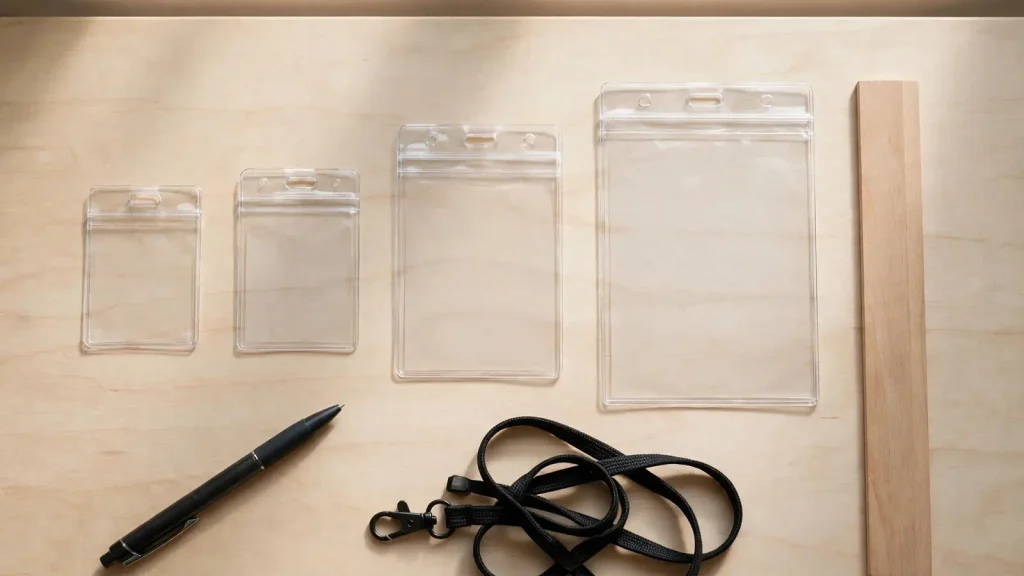
Sizes for name badges for work start with the name, not the catalog. A standard office badge runs about 3 by 2 inches, which fits a first name in large letters and a title below it. A hanging badge runs about 3 by 4 inches, which leaves room for a photo and a logo. The credit-card badge runs 2.12 by 3.38 inches, which matches a wallet slot and a door reader.
But bigger is not always better. A badge wider than 3 inches pulls a light shirt down, and a badge taller than 2 inches bumps the collar. In fact, the name should be the largest text on the badge, at about 24 points or more, so it reads at arm’s length. So measure the name first: a long name needs a wider badge, and a short name fits a small one.
Test the size before you order a hundred. Print one badge on paper, cut it out, and wear it for a day. If the name reads from across the room and the badge never flips over, the size is right. Also, check the badge against the uniform: a dark badge vanishes on a dark shirt, and a white badge glares on a white one.
What to Print on Name Badges for Work
What to print on name badges for work is a short list, and shorter is better. The first name goes first and biggest, since that is what a customer will say out loud. The job title goes below it in smaller letters, so a visitor knows who can help with what. A company logo sits at the top or in a corner, small enough not to fight the name.
The second line can hold a department, a language, or a credential. A nurse might add “RN” after the name, and a bilingual worker might add “Se habla español” below the title. In fact, two lines below the name is the limit: a badge with four lines of text is a business card, not a badge. So leave off phone numbers, email addresses, and home towns.
First names only are the norm at most workplaces. A last name adds formality, and some staff prefer it, but a full name on a badge can feel too personal in a shop or a cafe. Also, let each worker choose: a preferred name on the badge beats a legal name nobody uses. In fact, a badge that says “Alex” will get used far more than one that says “Alexander.”
Name Badges for Work by Job: Office, Retail, Healthcare and Hospitality
Office name badges for work are usually metal or plastic plates with a magnetic backing. The name and title sit in clean print, and the badge stays on a shirt all day. A reception desk looks finished when the badge matches the plate on the counter, so order custom name plates for desk from the same shop and the font and finish will match.
Retail is harder on a badge. Staff bend, lift, and lean all day, so a light plastic badge with a pin backing survives best. A magnetic backing can slip off a moving worker, and a heavy metal plate drags a thin uniform down. In fact, retail badges need replacing often, so a cheap badge that looks fresh beats a dear one that looks worn.
Healthcare has its own rules. A nurse or a carer needs a badge that wipes clean, since it meets soap, sanitizer, and gloves all day. A smooth plastic or sealed metal badge wins here, and a lanyard card suits a ward where staff move between rooms. But a dangling lanyard can catch on equipment, so a breakaway cord is a must.
Hospitality runs on first names. A hotel or restaurant badge carries a first name in big letters and a role below it, like “Front Desk” or “Server”. A company that sends staff to trade shows can reuse the same badge artwork for event days, and the live guide to name tags for corporate events shows which sizes and holders work best when your team staffs a conference.
What Name Badges for Work Cost and Where to Buy
The price of name badges for work follows the material, the size, and the size of the order. A printed plastic badge tends to run about $2 to $6 each. An engraved metal badge tends to run about $5 to $15 each. A reusable insert badge tends to run about $1 to $4 each, plus the cost of the paper inserts. Prices vary by seller, so check two or three listings before you pay.
Bulk changes the math. A PVC ID card can cost under $1 each when you order a few hundred, and a lanyard with a holder can run about $1 to $3 each in a pack. In fact, some sellers cut the price in half once an order passes 100 pieces. So a big team should always ask for a bulk quote before ordering one badge at a time.
For a one-off order, FedEx Office prints custom badges in plastic, wood, metal-style, and clear acrylic, with full-color printing for a logo. Amazon and Avery sell hanging badge packs for events, like 200 holders with printable inserts. Finally, a local engraver suits a small team that wants metal badges fast. You can see the metal and check the engraving before you pay.
Allow time for the order. A printed badge usually ships in a few days, while an engraved badge can take one to two weeks. In fact, most sellers need a proof first: a digital image of the badge with the names spelled out. So read the proof letter by letter, since a custom badge is usually final sale.
Care, Cleaning and Reuse for Name Badges for Work
A badge lasts longer when it is cleaned and stored right. Wipe a plastic badge with a damp cloth once a week, and wipe a metal badge with a soft dry cloth. In fact, a badge that is cleaned often keeps its print sharp for years. But never use a rough sponge on an engraved plate, since it can dull the letters.
Next, store badges flat in a drawer or a small box, not loose in a pocket with keys. A metal badge scratches against keys, and a plastic badge cracks under pressure. So give each badge its own slot or sleeve. Also, keep spare magnetic backings in the drawer: a lost magnet is the most common reason a badge stops being worn.
Finally, reuse is where insert badges earn their keep. Print a fresh card when a name changes, and the same frame serves the next worker. A pin badge can also be reissued, but an engraved metal badge cannot: the name is cut into the plate for good. So plan the badge type around how often your team changes.
How to Choose Name Badges for Work
Five quick checks will keep a work badge readable, comfortable, and worth the money. Run through them in order, and order only when all five pass.
Match the Badge to the Job
First, match the badge to the work. An office worker needs a smart metal plate, a retail worker needs a light plastic badge, and a nurse needs a badge that wipes clean. In fact, the job picks the badge, not the catalog.
Pick the Backing for the Clothes
Next, think about what your team wears. Magnetic backings suit good shirts and blouses, pins suit jackets and uniforms, and clips suit badges that change hands. But check for pacemakers first: anyone with one should wear a pin, not a magnet.
Read the Name at Arm’s Length
Then, print one badge and read it from across the room. The name should be the largest text, in a plain font with strong contrast. In fact, a name that only reads up close has failed its job.
Count the Cost per Person, Not per Badge
Also, work out the cost per person over a year. A dear metal badge that lasts three years can cost less than a cheap plastic badge replaced every month. So ask for a bulk quote before you judge a price.
Order a Sample Before the Full Run
Finally, order one sample badge before you order fifty. Wear it for a full shift, wash the shirt it sat on, and check the print the next morning. In fact, a sample that survives a week will survive a year.
Frequently Asked Questions
How much do name badges for work cost?
Expect to pay about $2 to $6 for a printed plastic badge, about $5 to $15 for an engraved metal one, and about $1 to $4 for a reusable insert badge, plus inserts. Prices move from seller to seller, so check a few listings before you pay.
Are magnetic name badges safe?
Yes, for most people. A magnetic backing holds through the fabric without holes, and it suits office shirts and blouses. But a worker with a pacemaker or an implanted defibrillator should wear a pin backing instead, and magnets should stay away from phones and credit cards.
What size should a work name badge be?
A standard office badge is about 3 by 2 inches, and a hanging badge is about 3 by 4 inches. A credit-card badge is 2.12 by 3.38 inches. Set the first name at about 24 points or more so it reads at arm’s length.
What should I put on a work name badge?
Put the first name biggest, the job title below it, and the company logo small at the top. A department, a language, or a credential can sit on a second line. So keep it to three lines at most.
Can I reuse name badges when staff change?
Yes, with an insert badge. Print a fresh paper card and the same frame serves the next worker. An engraved metal badge cannot be reused, since the name is cut into the plate.
How do I order name badges for a whole team?
Send the seller a list of names and titles in a spreadsheet, one row per person. Ask for a digital proof, read every name letter by letter, and order a sample first. In fact, a spreadsheet beats a long email, since names cannot be misread.
Do name badges for work need a logo?
No, but a logo helps. A small logo at the top of the badge tells a customer which company the worker belongs to. So add one if you have it, and leave it off if you do not.
A Badge That Does the Talking
The best name badges for work are the ones customers read without thinking. A name in big letters, a title below it, and a backing that suits the shirt. So pick the material for the job, the backing for the clothes, and the size for the name.

Mr Zain created NameMeaningBase to help people explore the beauty and significance of names. From popular baby names to unique names and their origins, I strive to deliver useful insights that inspire curiosity and help readers find names with meaning.